
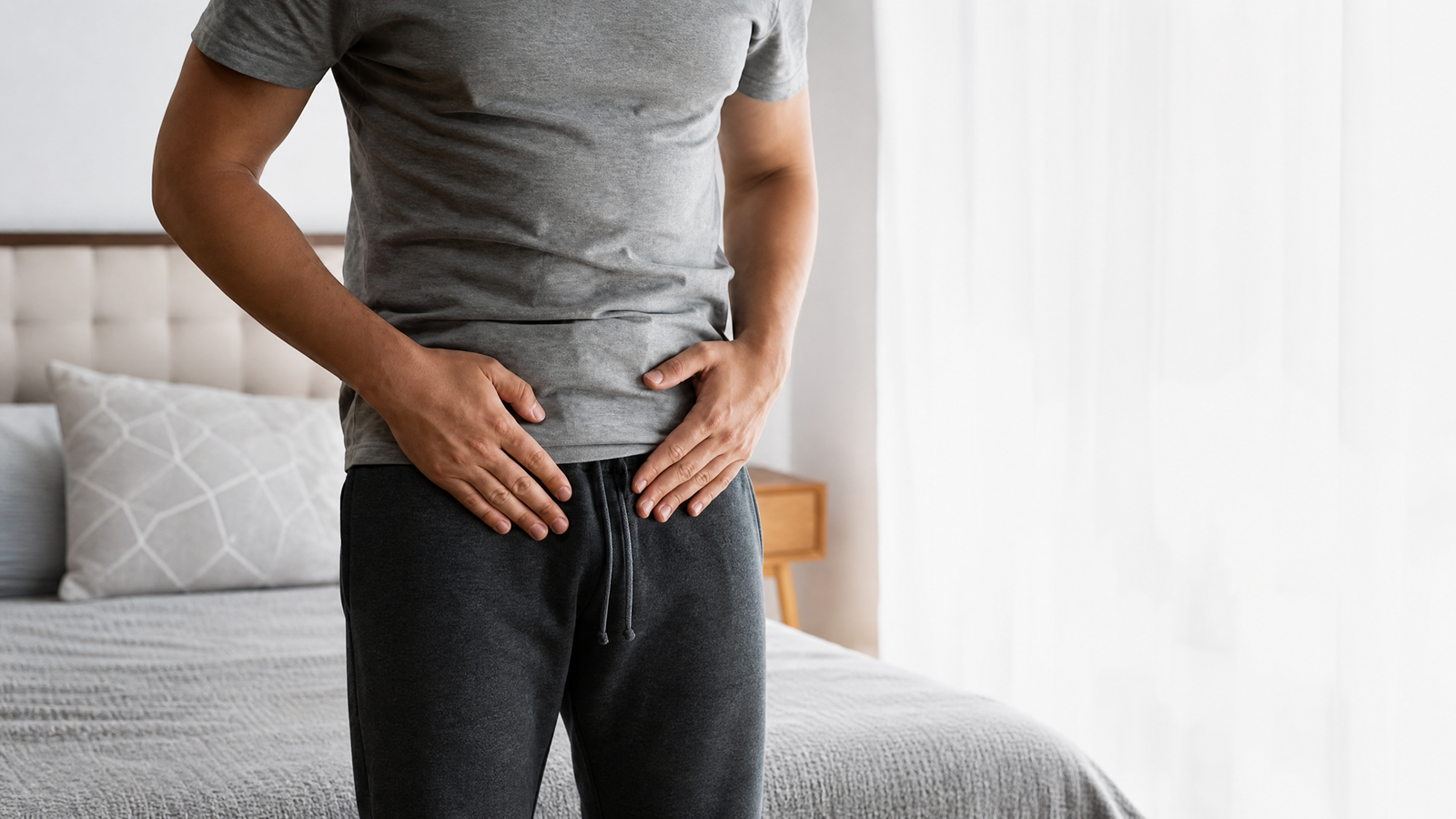
When you think about men’s health, you probably think about your heart, muscles, hormones, or prostate, but not your pelvic floor.
But the pelvic floor plays an important role in everyday male health. These muscles help support the bladder, bowel, and prostate, while also contributing to urinary control, bowel function, sexual function, and core stability.
When the pelvic floor muscles become weak, overly tight, or poorly coordinated, problems can show up in ways you might not immediately associate with your pelvic floor.
Here are seven common issues that may have a pelvic-floor connection—and why paying attention to this often-overlooked muscle group matters.
1. Urine Leakage
A few drops of urine after exercise, coughing, sneezing, lifting, or even getting up from a chair may seem like something you simply have to put up with.
Not necessarily.
The pelvic floor muscles help support the bladder and contribute to urinary continence. When these muscles are weakened or don't coordinate properly, urine leakage can occur. This can be particularly relevant after prostate surgery, but pelvic floor changes can have other causes as well.
If you're experiencing persistent or worsening leakage, it's worth discussing it with a healthcare professional rather than simply accepting it as a normal part of getting older.

2. Frequent or Urgent Urination
Do you constantly feel like you need to find a bathroom?
Urinary frequency and urgency can have many causes, including bladder conditions and other medical issues. However, pelvic floor dysfunction can also play a role.
A pelvic floor that is constantly tense or isn't coordinating properly may interfere with normal bladder function.
That's why more Kegels aren't automatically the answer to every urinary problem. The goal is healthy muscle function, not just stronger muscles.
3. Difficulty Controlling Urine After Prostate Surgery
Prostate surgery can affect the muscles and structures involved in urinary control. Urinary incontinence is therefore a common concern during recovery after prostatectomy.
Pelvic floor muscle training is often incorporated into rehabilitation to help men regain control.
4. Pelvic or Perineal Pain
Pelvic floor problems aren't always about weakness.
Sometimes, the muscles can become too tense.
Chronic pelvic pain, discomfort around the perineum, groin or genital area, and certain forms of chronic pelvic pain syndrome may be associated with pelvic floor muscle dysfunction.
This is an important distinction because repeatedly contracting an already-tight pelvic floor may not be helpful.
5. Erectile or Sexual Function Concerns
The pelvic floor is involved in male sexual function, including the muscular control that contributes to erection and ejaculation.
Research has found an association between pelvic floor function and several aspects of male sexual dysfunction, including erectile and ejaculatory problems. That doesn't mean pelvic floor training is a universal solution for erectile dysfunction. Sexual function can be affected by cardiovascular health, hormones, medications, psychological factors, neurological conditions, and many other factors.
But your pelvic floor is one piece of the bigger picture—and one that is often overlooked.
6. Bowel Control and Constipation
The pelvic floor doesn't only help control your bladder.
These muscles also contribute to bowel function. They need to contract to help maintain control and relax when you need to empty your bowels. Poor coordination can therefore contribute to problems such as leakage, difficulty emptying, or constipation.
Again, the goal isn't simply to make the muscles stronger.
Healthy pelvic floor function means being able to contract, relax, and coordinate the muscles when your body needs them.
7. Core Stability and Everyday Movement
Your pelvic floor is part of the body's deeper support system.
Along with the diaphragm, abdominal muscles, and back muscles, it contributes to the pressure and stability of your core. When you cough, sneeze, lift something heavy, or exercise, the pelvic floor responds as part of this coordinated system.
That means pelvic floor health isn't only about bathroom habits or sexual health.
It can also be part of maintaining good movement, control, and physical function as you get older.
So, What Does a Healthy Male Pelvic Floor Actually Look Like?
A healthy pelvic floor isn't necessarily the strongest possible pelvic floor.
It's a pelvic floor that can contract when needed, relax when needed, and coordinate with the rest of your body.
Think of it less like a muscle you need to constantly tighten and more like a muscle group that needs control.
For some men, the priority may be strengthening. For others, learning to relax an overly tense pelvic floor may be more important. And for many, improving coordination is the key.
That's why pelvic floor concerns are best evaluated individually.
Can Men Train Their Pelvic Floor?
Yes.
Pelvic floor exercises, including appropriately performed Kegel exercises, can help strengthen the pelvic floor and improve bladder control for some men.
But one of the biggest challenges is simply knowing whether you're activating the right muscles.
For men looking for an additional way to incorporate pelvic floor training into their routine, the AQUA QUTTO External EMS Pelvic Floor Trainer is designed to provide external electrical stimulation to the pelvic floor muscles and its surrounding tissues.
Meet AQUA QUTTO
AQUA QUTTO is an external EMS pelvic floor trainer designed to make pelvic floor care easier to incorporate into everyday life.
The goal isn't to replace pelvic floor exercises, medical care, or professional assessment. Instead, AQUA QUTTO can be part of a consistent pelvic floor wellness routine for men who want a convenient way to support pelvic floor muscle training at home.

Your Pelvic Floor Deserves More Attention
Men often don't think about their pelvic floor until something goes wrong.
But urinary control, bowel function, pelvic comfort, sexual function, and core stability are all important parts of overall well-being.
Taking care of your pelvic floor doesn't have to be embarrassing or complicated. Start by understanding how these muscles work, pay attention to changes in your body, and seek professional guidance when necessary.
And remember: pelvic floor health isn't just about strength. It's about control, coordination, and knowing when to contract—and when to let go.
A Note on Your Health
Pelvic floor symptoms can have many different causes, and not every urinary, bowel, sexual, or pelvic symptom is caused by the pelvic floor. If you experience persistent pain, urinary or bowel changes, erectile difficulties, blood in your urine or stool, fever, or other concerning symptoms, consult a qualified healthcare professional for evaluation.
AQUA QUTTO is intended as a wellness and muscle-stimulation device and is not intended to diagnose, treat, cure, or prevent any disease or medical condition. Follow the product's instructions and safety precautions before use.


Menopause & Your Pelvic Health: What’s Changing and Why
When Your Body Won’t Switch Off: A Better Bedtime Routine