
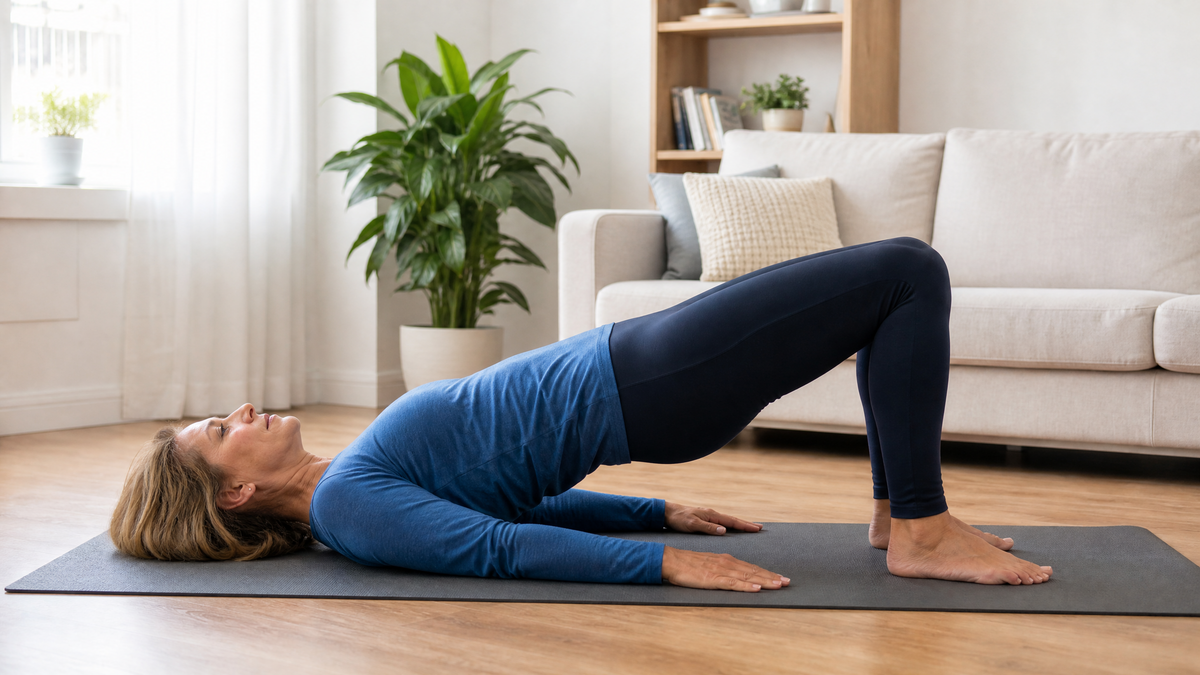
Kegels are probably the first exercise most people hear about when it comes to pelvic floor health.
The idea sounds simple: contract your pelvic floor muscles, hold, relax, and repeat.
But what if you’re doing Kegels regularly and still don’t feel like they’re making a difference?
The answer may not be that you’re “bad” at Kegels. Pelvic floor training isn’t one-size-fits-all. Some people may have difficulty identifying the right muscles, maintaining a proper contraction, or consistently activating the pelvic floor on their own. Others may need a different approach altogether.
Why Kegels May Not Feel Right for Everyone
Pelvic floor muscles are like any other muscle group: effective training depends on being able to activate the right muscles with the right amount of effort.
That can be surprisingly difficult.
1. You May Not Be Activating the Right Muscles
A Kegel isn't simply “squeezing down there.”
To perform one correctly, you need to identify and contract the pelvic floor muscles without excessively tightening your abdomen, buttocks, or thighs.
For beginners, knowing whether you're actually engaging the intended muscles can be challenging.
And if you aren't activating the pelvic floor effectively, doing more repetitions doesn't necessarily solve the problem.
2. You May Have Trouble Generating a Strong, Voluntary Contraction
Some people have difficulty voluntarily contracting their pelvic floor muscles, whether they're new to pelvic floor exercises or have reduced awareness of the muscles.
In these situations, simply being told to “do more Kegels” may not be particularly helpful.
Clinical guidance has recognized that electrical stimulation may be considered for some people who cannot actively contract their pelvic floor muscles.
3. More Kegels Aren't Always the Answer
Pelvic floor health isn't only about having strong muscles.
The pelvic floor also needs to relax, lengthen, and coordinate with the rest of the body.
If your pelvic floor is already tense or you're performing contractions incorrectly, adding more repetitions may not address what your body actually needs.
That's why persistent pelvic discomfort, difficulty relaxing the pelvic floor, or ongoing urinary symptoms are worth discussing with a healthcare professional or pelvic floor physical therapist rather than simply increasing your Kegel routine.
What Is EMS (Electrical Muscle Stimulation)?
EMS, or Electrical Muscle Stimulation, uses controlled electrical impulses to stimulate muscles and encourage them to contract.
Think of it as an external signal that can prompt muscle activity without requiring you to consciously initiate every contraction yourself.
EMS has been used in various forms of muscle training and rehabilitation, and pelvic floor electrical stimulation has also been studied as an approach to pelvic floor muscle training.
Depending on the stimulation settings and the way it is used, EMS can be incorporated into routines focused on muscle activation, relaxation, or coordination.
This is important because pelvic floor wellness isn't simply about making the muscles stronger. Healthy pelvic floor function also involves being able to contract when needed and relax when needed.
EMS therefore isn't necessarily about replacing Kegels. For some people, EMS devices like the Aqua Qutto can provide another way to engage with and train the pelvic floor muscles.
Rather than relying completely on conscious muscle contractions like traditional Kegels, Aqua Qutto uses controlled electrical impulses to stimulate involuntary pelvic floor muscle contractions.
With 10 EMS intensity levels, Aqua Qutto lets you adjust the stimulation to your comfort level. Each session follows a simple 15-minute timer, making it easy to fit pelvic floor training into your existing wellness routine.
More Than Strength: Relaxation & Coordination Training
When people think about pelvic floor training, they often focus exclusively on strengthening.
But a well-functioning pelvic floor needs more than strength. It needs coordination and the ability to relax.
Some people naturally hold tension in their pelvic floor muscles, particularly when stressed or when they habitually brace their core. In these situations, strengthening the pelvic floor muscles may not be the only thing that needs attention.
That's why a balanced pelvic floor routine includes contraction, relaxation, and coordination.
Relaxation
Aqua Qutto can also be incorporated into a relaxation-focused routine for people who experience tense pelvic floor muscles.
Rather than continuously asking the muscles to contract harder, a lower-intensity stimulation approach can be used as part of a routine focused on helping the muscles release and relax between contractions.
The goal isn't simply to build stronger muscles—it's to develop better awareness of when the pelvic floor should engage and when it should let go.
Coordination
Your pelvic floor doesn't work in isolation.
It works together with your abdominal muscles, diaphragm, hips, and other muscles involved in core stability and movement. Learning to coordinate contraction and relaxation can therefore be just as important as building strength.
Aqua Qutto can provide a consistent external stimulus, giving you another way to incorporate pelvic floor engagement into your routine without having to rely entirely on consciously initiating each contraction.
A Different Approach to Pelvic Floor Training
Think of Kegels and EMS as two different approaches to pelvic floor engagement.
Kegels:
You consciously contract and relax your pelvic floor muscles.
EMS:
Electrical impulses provide external stimulation that prompts the muscles to contract and can be incorporated into routines focused on activation, relaxation, and coordination.
For someone who struggles to identify or voluntarily activate their pelvic floor muscles, an EMS device may offer a different starting point or complement to an existing pelvic floor routine.
And for someone whose pelvic floor tends to feel tight, incorporating relaxation alongside activation may provide a more balanced approach than focusing exclusively on repeated contractions.
That doesn't mean EMS is inherently better than Kegels. It simply gives some people another option.
Who Might Benefit from an EMS Approach?
Aqua Qutto may be worth exploring if you:
-
Have difficulty identifying your pelvic floor muscles
-
Struggle to perform Kegels consistently
-
Find traditional pelvic floor exercises difficult to incorporate into your routine
-
Want another way to engage the pelvic floor muscles
-
Want to incorporate both muscle activation and relaxation into your routine
-
Experience a severe feeling of pelvic floor weakness
-
Prefer a guided, time-limited training routine
-
Want to complement an existing pelvic floor exercise routine
Disclaimer: If you're experiencing persistent pelvic pain, pelvic pressure, urinary symptoms, or significant pelvic floor dysfunction, it's important to speak with a qualified healthcare professional. Aqua Qutto does not diagnose or treat any medical conditions and is not intended to replace medical treatment.


當您的身體不聽使喚:更好的睡前習慣